.png)


Sleep Apnea and Mental Health: The Hidden Connection
When most people think about obstructive sleep apnea, they picture loud snoring, interrupted sleep, or daytime fatigue. While these are common symptoms, many patients are surprised to learn that sleep apnea can also have a significant impact on mental and emotional well-being.
Research continues to show a strong connection between sleep apnea and mental health conditions such as anxiety, depression, mood disorders, memory problems, and difficulty concentrating. Unfortunately, many individuals seek treatment for these symptoms without realizing that poor sleep may be contributing to the problem.
Understanding the relationship between sleep apnea and mental health can help patients take an important step toward improving both their sleep and overall quality of life.
What Is Obstructive Sleep Apnea?
Obstructive sleep apnea (OSA) is a sleep disorder that occurs when the airway becomes partially or completely blocked during sleep. These blockages can happen repeatedly throughout the night, causing brief pauses in breathing and reducing oxygen levels.
Each breathing interruption forces the brain to partially awaken in order to restore airflow. While these awakenings are often so brief that patients don't remember them, they prevent the body from achieving deep, restorative sleep.
As a result, many people with sleep apnea wake up feeling exhausted despite spending enough time in bed.
How Sleep Affects Mental Health
Sleep is essential for emotional regulation, memory formation, stress management, and cognitive function.
During healthy sleep, the brain performs important functions such as:
Processing emotions
Consolidating memories
Regulating stress hormones
Restoring mental energy
Supporting concentration and focus
When sleep becomes fragmented night after night, these processes are disrupted, which can negatively affect mood and mental performance.
For individuals with untreated sleep apnea, this disruption can occur hundreds of times each night.
The Link Between Sleep Apnea and Depression
One of the most common mental health concerns associated with sleep apnea is depression.
Symptoms of depression that may overlap with sleep apnea include:
Persistent fatigue
Low energy
Lack of motivation
Difficulty concentrating
Irritability
Feelings of sadness
Reduced interest in activities
In some cases, patients are treated for depression for years before discovering that an underlying sleep disorder may be contributing to their symptoms.
While sleep apnea is not always the sole cause of depression, poor sleep quality can make depressive symptoms more severe and more difficult to manage.
Sleep Apnea and Anxiety
Sleep apnea can also contribute to anxiety symptoms.
Repeated breathing interruptions create stress on the body throughout the night. Oxygen fluctuations and sleep fragmentation can activate the body's stress response, increasing feelings of nervousness and tension.
Many patients with untreated sleep apnea report:
Excessive worrying
Restlessness
Increased stress levels
Racing thoughts
Difficulty relaxing
The cycle can become self-perpetuating. Anxiety can make sleep more difficult, while poor sleep worsens anxiety symptoms.
Mood Swings and Irritability
Have you ever noticed that you're more irritable after a poor night's sleep?
For patients with sleep apnea, poor sleep becomes a nightly occurrence.
Chronic sleep deprivation can lead to:
Increased frustration
Short temper
Emotional sensitivity
Difficulty coping with stress
Relationship challenges
Family members and spouses are often among the first to notice these changes.
Many patients report significant improvements in mood after receiving effective sleep apnea treatment.
Memory and Concentration Problems
The brain depends on quality sleep to function properly.
When sleep apnea repeatedly interrupts sleep cycles, patients may experience:
Brain fog
Forgetfulness
Difficulty focusing
Reduced productivity
Slower reaction times
These cognitive symptoms can affect performance at work, school, and home.
Many individuals mistakenly assume these issues are simply part of aging when poor sleep quality may be playing a significant role.
Sleep Apnea and Emotional Well-Being
Living with untreated sleep apnea can affect nearly every aspect of daily life.
Patients often struggle with:
Low motivation
Reduced enjoyment of activities
Social withdrawal
Lack of energy
Poor self-confidence
The combination of physical exhaustion and emotional strain can significantly impact overall quality of life.
Fortunately, effective treatment can help address many of these challenges.
Can Treating Sleep Apnea Improve Mental Health?
For many patients, the answer is yes.
When sleep apnea is properly treated, patients often experience improvements in:
Energy levels
Mood stability
Focus and concentration
Emotional resilience
Daytime alertness
Overall well-being
Although sleep apnea treatment is not a substitute for mental health care, improving sleep quality can be an important component of a comprehensive wellness plan.
Patients who receive treatment often report feeling more rested, more productive, and better able to manage everyday stress.
Oral Appliance Therapy: A Comfortable Treatment Option
Many patients diagnosed with obstructive sleep apnea are prescribed Continuous Positive Airway Pressure (CPAP) therapy. While CPAP can be highly effective, some individuals find it difficult to tolerate.
For patients seeking an alternative, oral appliance therapy may be an excellent solution.
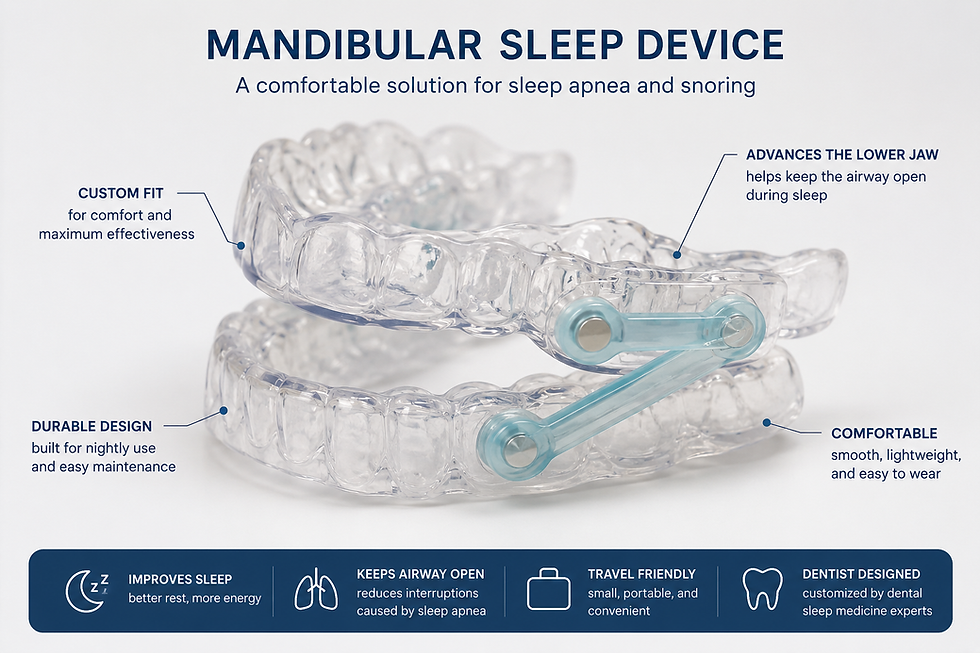
A custom mandibular advancement device is worn during sleep and works by gently repositioning the lower jaw to help keep the airway open.
Benefits of oral appliance therapy include:
Comfortable custom fit
Quiet operation
Easy maintenance
Portability for travel
Improved treatment compliance for many patients
For individuals struggling with CPAP therapy, oral appliance therapy may provide a more convenient path toward better sleep and improved overall health.
When Should You Seek Help?
You should consider speaking with a healthcare provider if you experience:
Loud snoring
Excessive daytime fatigue
Morning headaches
Difficulty concentrating
Anxiety or depression symptoms that seem connected to poor sleep
Reports of breathing pauses during sleep
A sleep study can help determine whether obstructive sleep apnea is contributing to your symptoms.
Better Sleep Can Support Better Mental Health
The connection between sleep apnea and mental health is often overlooked, but it can have a profound impact on daily life.
When sleep quality suffers, emotional health often suffers as well. Treating sleep apnea can improve not only breathing and energy levels but also mood, focus, and overall quality of life.
At our Oklahoma City dental sleep medicine practice, we help patients explore comfortable treatment options such as oral appliance therapy to manage obstructive sleep apnea and achieve healthier, more restorative sleep.
If you have been diagnosed with sleep apnea or suspect poor sleep may be affecting your mental well-being, contact our office today to schedule a consultation and learn more about your treatment options.
Frequently Asked Questions
Can sleep apnea cause anxiety?
Sleep apnea can contribute to anxiety symptoms by disrupting sleep, increasing stress hormone activity, and reducing overall sleep quality.
Can sleep apnea cause depression?
Research has found a strong association between sleep apnea and depression. Poor sleep quality may worsen depressive symptoms and contribute to emotional distress.
Will treating sleep apnea improve my mood?
Many patients report improvements in mood, energy, concentration, and emotional well-being after receiving effective sleep apnea treatment.
Can oral appliance therapy help with sleep apnea?
Yes. Oral appliance therapy is an effective treatment option for many patients with obstructive sleep apnea, particularly those who cannot tolerate CPAP therapy.
Comments