.png)


Why More Physicians Are Referring Patients for Oral Appliance Therapy
For years, Continuous Positive Airway Pressure (CPAP) therapy has been considered the standard treatment for obstructive sleep apnea (OSA). While CPAP remains an effective option for many patients, healthcare providers are increasingly recognizing that successful treatment depends not only on effectiveness but also on patient compliance.
As a result, more physicians are referring patients for oral appliance therapy, a comfortable, evidence-based treatment option that can help patients manage sleep apnea when CPAP is not tolerated or preferred.
If you've been diagnosed with obstructive sleep apnea and struggle with CPAP therapy, your physician may recommend working with a dentist trained in dental sleep medicine to explore oral appliance therapy.
Understanding Obstructive Sleep Apnea
Obstructive sleep apnea is a common sleep disorder that occurs when the airway repeatedly becomes blocked during sleep. These interruptions can happen dozens or even hundreds of times each night, reducing oxygen levels and disrupting restorative sleep.
Common symptoms include:
Loud snoring
Pauses in breathing during sleep
Excessive daytime sleepiness
Morning headaches
Difficulty concentrating
Irritability or mood changes
When left untreated, sleep apnea can increase the risk of:
High blood pressure
Heart disease
Stroke
Type 2 diabetes
Cardiac arrhythmias
Workplace and driving accidents
Because of these risks, physicians are focused on helping patients find treatments they can use consistently over the long term.
The Challenge of CPAP Compliance
CPAP therapy works by delivering a constant stream of air through a mask to keep the airway open during sleep. While highly effective when used properly, some patients find it difficult to tolerate.
Common reasons patients discontinue CPAP therapy include:
Mask discomfort
Air leaks
Dry mouth
Claustrophobia
Noise concerns
Difficulty traveling with equipment
Interrupted sleep
Unfortunately, even the most effective treatment cannot help if it remains unused. Physicians understand that long-term adherence is one of the most important factors in successful sleep apnea management.
What Is Oral Appliance Therapy?
Oral appliance therapy uses a custom-made mandibular advancement device worn during sleep.
The appliance works by gently repositioning the lower jaw forward, helping keep the airway open and reducing airway collapse that contributes to obstructive sleep apnea.
Unlike CPAP machines, oral appliances are:
Small and portable
Quiet
Easy to maintain
Comfortable for many patients
Convenient for travel
Because of these advantages, oral appliance therapy has become an increasingly popular treatment option.
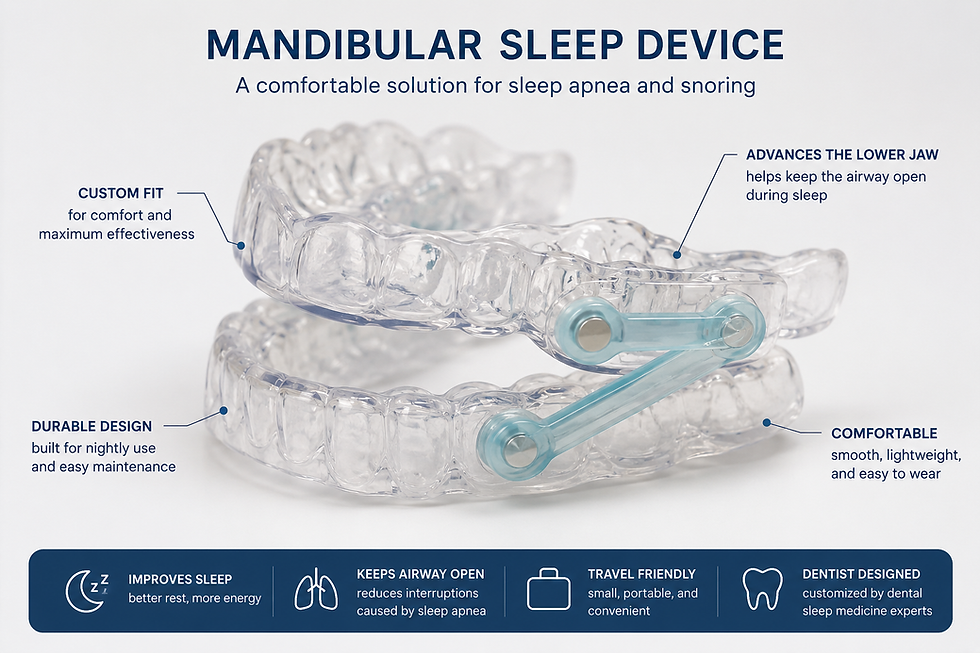
Why Physicians Are Referring More Patients for Oral Appliance Therapy
Improved Patient Compliance
One of the primary reasons physicians recommend oral appliance therapy is patient adherence.
Many patients find oral appliances significantly easier to wear than CPAP equipment. When patients consistently use their treatment, they are more likely to experience meaningful improvements in sleep quality and overall health.
Evidence-Based Clinical Support
Oral appliance therapy is not simply an alternative treatment—it is supported by extensive clinical research.
Professional organizations such as the American Academy of Sleep Medicine and the American Academy of Dental Sleep Medicine recognize oral appliance therapy as an effective treatment option for patients with mild to moderate obstructive sleep apnea and for patients with severe sleep apnea who cannot tolerate CPAP therapy.
This growing body of evidence has increased physician confidence in referring appropriate patients for treatment.
Collaborative Patient Care
Today's healthcare providers increasingly recognize the benefits of collaborative care.
Sleep physicians, primary care providers, cardiologists, pulmonologists, and dentists trained in dental sleep medicine often work together to ensure patients receive comprehensive treatment.
This team-based approach helps patients achieve better outcomes while improving communication between healthcare providers.
A Better Option for CPAP-Intolerant Patients
Many physicians see patients who have tried CPAP but simply cannot adapt to the therapy despite multiple adjustments.
Rather than leaving sleep apnea untreated, physicians often refer these patients for oral appliance therapy as a practical alternative.
This allows patients to continue managing their condition without abandoning treatment altogether.
Growing Awareness of Dental Sleep Medicine
As awareness of dental sleep medicine continues to grow, physicians are becoming more familiar with the role dentists play in treating sleep-disordered breathing.
Specially trained dental professionals can:
Evaluate airway concerns
Fabricate custom oral appliances
Monitor treatment effectiveness
Make adjustments for optimal comfort and results
Coordinate care with referring physicians
This specialized expertise has strengthened relationships between medical and dental providers.
Who Is a Candidate for Oral Appliance Therapy?
Patients who may benefit from oral appliance therapy include those who:
Have mild to moderate obstructive sleep apnea
Cannot tolerate CPAP therapy
Prefer a non-surgical treatment option
Travel frequently
Experience chronic snoring
Want a more convenient treatment solution
A sleep study and comprehensive evaluation are typically required before treatment begins.
The Benefits Patients Often Experience
Patients who successfully use oral appliance therapy frequently report:
Reduced snoring
Improved sleep quality
Increased daytime energy
Better concentration
Enhanced quality of life
Greater treatment satisfaction
For many individuals, the convenience and comfort of oral appliance therapy make long-term treatment more achievable.
How the Referral Process Works
The referral process is straightforward and designed to ensure continuity of care.
A physician diagnoses obstructive sleep apnea through a sleep study.
The physician determines whether oral appliance therapy may be appropriate.
The patient is referred to a qualified dental sleep medicine provider.
A custom oral appliance is fabricated and fitted.
Follow-up care and adjustments are completed as needed.
Treatment effectiveness is often confirmed through additional sleep testing.
This collaborative process helps ensure patients receive personalized care that addresses their unique needs.
The Future of Sleep Apnea Treatment
As research continues to highlight the importance of treatment adherence, oral appliance therapy is expected to play an increasingly important role in sleep apnea management.
Physicians understand that successful treatment isn't simply about prescribing therapy—it's about finding a solution patients can comfortably use every night.
For many individuals, oral appliance therapy offers exactly that.
Learn Whether Oral Appliance Therapy Is Right for You
If you've been diagnosed with obstructive sleep apnea and struggle with CPAP therapy, you may be a candidate for oral appliance therapy.
At our Oklahoma City dental sleep medicine practice, we work closely with sleep physicians and healthcare providers to deliver custom oral appliance therapy designed to improve sleep quality, reduce snoring, and support long-term health.
Contact our office today to schedule a consultation and learn whether oral appliance therapy could be the right solution for your sleep apnea treatment needs.
Frequently Asked Questions
Do physicians commonly refer patients for oral appliance therapy?
Yes. Referrals for oral appliance therapy have increased significantly as physicians recognize the importance of patient comfort, compliance, and treatment success.
Is oral appliance therapy covered by insurance?
Many medical insurance plans provide coverage for oral appliance therapy when medically necessary. Coverage varies by provider and plan.
Can oral appliance therapy replace CPAP?
For many patients with mild to moderate sleep apnea—and for patients who cannot tolerate CPAP—oral appliance therapy can be an effective treatment option.
Does oral appliance therapy stop snoring?
Many patients experience a substantial reduction in snoring because the appliance helps keep the airway open during sleep.
Comments