.png)


Understanding Undiagnosed Obstructive Sleep Apnea and How Dental Oral Sleep Appliances Can Help
- May 5
- 4 min read
What Is Obstructive Sleep Apnea and Why It Goes Undiagnosed

Obstructive sleep apnea occurs when the muscles in the throat relax too much during sleep, causing the airway to become partially or completely blocked. This blockage reduces airflow and triggers brief awakenings to resume normal breathing. These interruptions can happen dozens or even hundreds of times per night, severely disrupting sleep quality.
Many people with OSA do not realize they have it because symptoms often develop gradually and may be attributed to other causes. Common signs include:
Loud, chronic snoring
Excessive daytime sleepiness
Morning headaches
Difficulty concentrating
Irritability or mood changes
Because these symptoms can overlap with other conditions like insomnia or stress, OSA often remains undiagnosed. Left untreated, it increases the risk of high blood pressure, heart disease, stroke, and diabetes.
How Upper Airway Restriction Contributes to Sleep Apnea
Upper airway restriction refers to any narrowing or blockage in the nasal passages, throat, or mouth that limits airflow. Several factors can cause this restriction, including:
Enlarged tonsils or adenoids
Excess tissue in the throat
A naturally narrow airway
Obesity leading to fatty deposits around the airway
Structural issues like a recessed jaw or large tongue
When the airway is restricted, it becomes more likely to collapse during sleep, especially when muscles relax. This collapse causes the breathing interruptions characteristic of obstructive sleep apnea.
Traditional Treatments and Their Limitations
The most common treatment for OSA is continuous positive airway pressure (CPAP) therapy. CPAP machines deliver a steady stream of air through a mask to keep the airway open during sleep. While effective, many patients find CPAP uncomfortable or inconvenient, leading to poor adherence.
Surgery is another option but carries risks and is not suitable for everyone. Lifestyle changes like weight loss and avoiding alcohol before bed can help but may not fully resolve the problem.
How Dental Oral Sleep Appliances Work
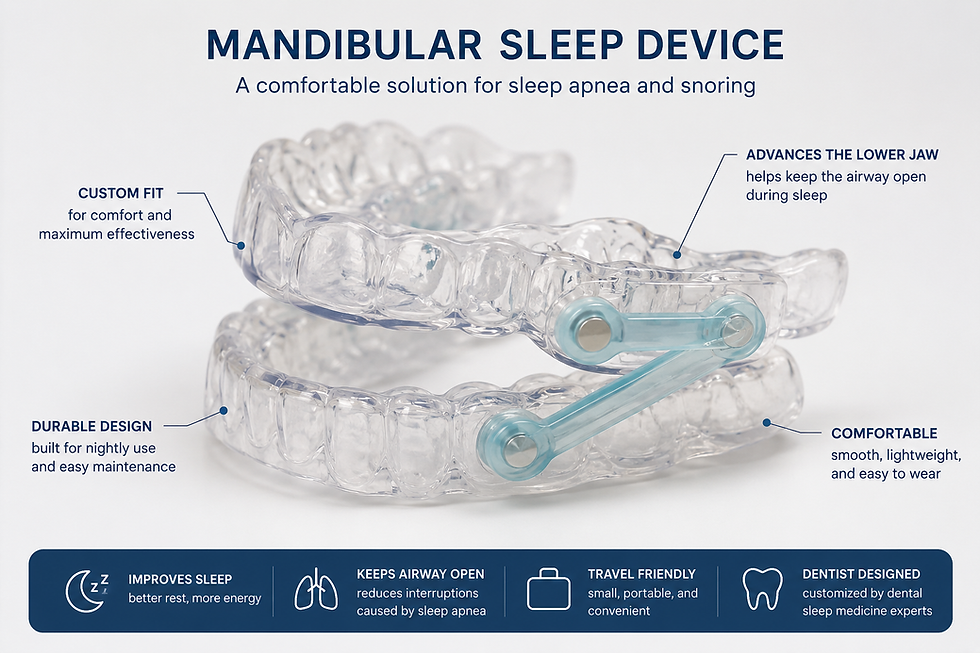
Dental oral sleep appliances are custom-made devices worn in the mouth during sleep. They work by repositioning the lower jaw and tongue forward to keep the airway open. This mechanical adjustment reduces airway collapse and improves airflow.
These appliances are designed by dentists trained in sleep medicine and are tailored to fit each patient’s mouth comfortably. They offer several advantages:
Non-invasive and easy to use
Portable and quiet compared to CPAP machines
Suitable for mild to moderate OSA or those who cannot tolerate CPAP
Can improve snoring and sleep quality
Benefits of Using a Dental Oral Sleep Appliance
Patients using dental oral sleep appliances often report better sleep and reduced daytime fatigue. Some specific benefits include:
Improved breathing during sleep
Decreased snoring, which benefits bed partners
Enhanced oxygen levels throughout the night
Reduced risk of OSA-related health problems
Increased comfort and convenience compared to other treatments
For example, a 2019 study published in the Journal of Clinical Sleep Medicine found that oral appliances significantly reduced apnea episodes and improved quality of life in patients with mild to moderate OSA.
Who Should Consider a Dental Oral Sleep Appliance?
Dental oral sleep appliances are a good option for people who:
Have been diagnosed with mild to moderate obstructive sleep apnea
Cannot tolerate CPAP therapy due to discomfort or inconvenience
Prefer a less invasive treatment option
Want to reduce snoring and improve sleep quality
It is important to consult a healthcare provider or sleep specialist to determine the best treatment based on individual needs and severity of OSA.
Tips for Getting the Most from Your Oral Sleep Appliance
To maximize the benefits of a dental oral sleep appliance, consider these tips:
Have the device fitted by a qualified dentist experienced in sleep apnea
Follow instructions for cleaning and maintenance to ensure hygiene
Attend follow-up appointments to adjust the fit as needed
Combine appliance use with lifestyle changes like weight management and avoiding alcohol before bed
Monitor symptoms and report any discomfort or changes to your healthcare provider
Importance of Treating Upper Airway Resistance
Upper airway resistance syndrome (UARS) is a condition that can significantly impact sleep quality and overall health. Unfortunately, many insurance plans do not cover treatment for UARS, despite its potential to lead to more serious conditions such as sleep apnea.Why Treatment is Essential
Prevention of Sleep Apnea: UARS can progress to obstructive sleep apnea (OSA), a more severe condition characterized by repeated interruptions in breathing during sleep.
Improved Sleep Quality: Treating UARS can enhance overall sleep quality, leading to better daytime functioning and reduced fatigue.
Health Risks: Untreated UARS may contribute to various health issues, including cardiovascular problems, metabolic disorders, and increased risk of accidents due to daytime sleepiness.
Challenges with Insurance Coverage
Many insurance companies classify UARS as a less severe condition, often resulting in limited coverage for diagnostic tests and treatment options. This lack of coverage can hinder patients from seeking necessary care, despite the potential long-term consequences.
Conclusion
Addressing upper airway resistance is crucial not only for immediate relief but also for preventing the progression to more serious sleep disorders like sleep apnea. Awareness and advocacy for better insurance coverage for UARS treatment are essential for improving patient outcomes.
Millions of people suffer from obstructive sleep apnea (OSA) without realizing it. This common sleep disorder causes repeated interruptions in breathing during sleep, leading to poor rest and serious health risks. Many cases remain undiagnosed because symptoms can be subtle or mistaken for other issues. One key factor contributing to OSA is upper airway restriction, which narrows the breathing passages and causes airway collapse during sleep. Fortunately, dental oral sleep appliances offer a practical solution for managing this condition, especially for those who cannot tolerate traditional treatments.
Summary
Undiagnosed obstructive sleep apnea affects many people and can lead to serious health issues if left untreated. Upper airway restriction plays a major role in causing airway collapse during sleep. While CPAP remains the standard treatment, dental oral sleep appliances provide an effective, comfortable alternative for many patients. These devices help keep the airway open by repositioning the jaw, improving breathing and sleep quality. If you suspect you have sleep apnea or struggle with traditional treatments, discussing oral appliance therapy with a sleep specialist could be a valuable next step toward better rest and health.
Comments